50 / 25
Fifty cards and twenty-five sheets is the suite we print most often. One hundred cards if the form stays standing. Not five hundred.
Catalogue
Stationery, broadsides, ketubah sheets, and book plates. Each is composed, inked, and impressed on cotton. Quantities are small; wording is yours.
I · Stationery
Calling cards, correspondence sheets, and envelopes printed from a single setting of the name. Hebrew on one side of the case, Latin on the other, or both on one card with a hairline between. Ink is usually iron black or oxblood; a blind-embossed monogram is possible when the paper is heavy enough.
A typical suite is fifty cards and twenty-five sheets. We will not print five hundred of anything that belongs in a drawer. Change of address, studio credits, and family letterheads are welcome when the type can be kept standing for a second pass.
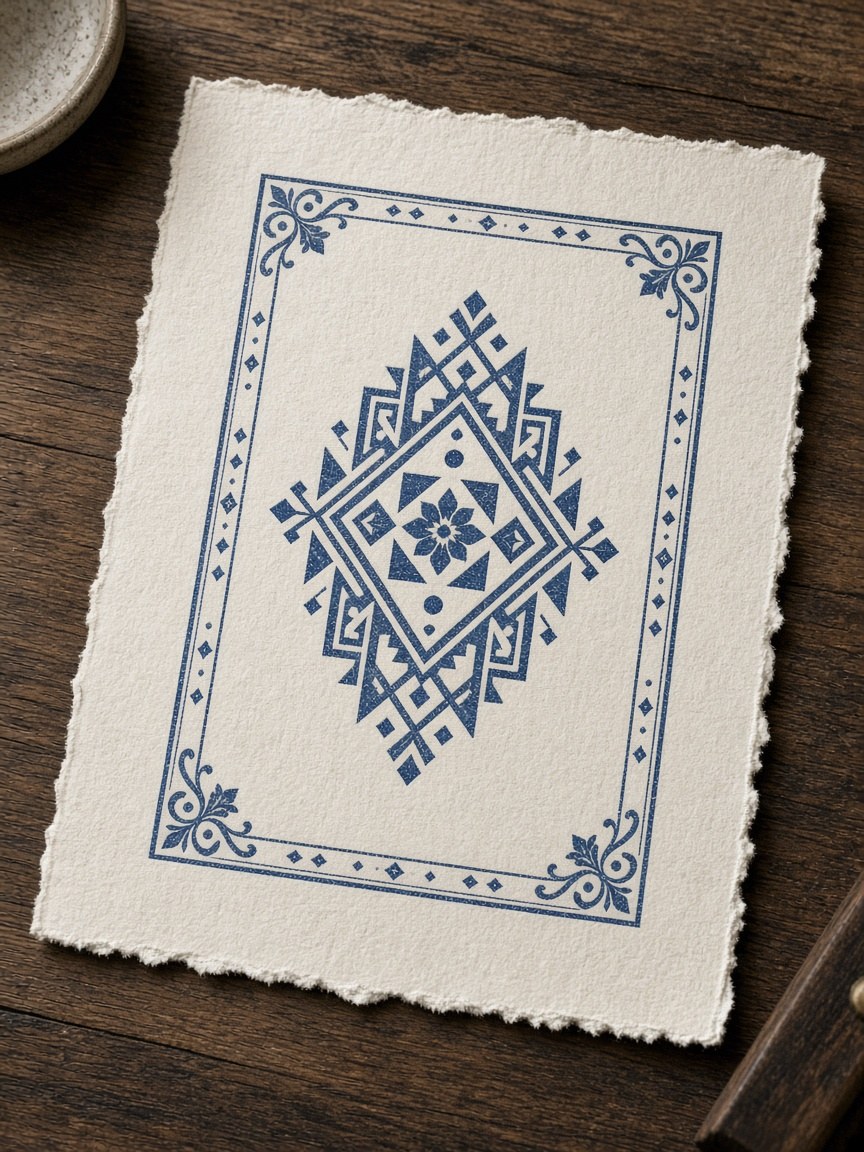
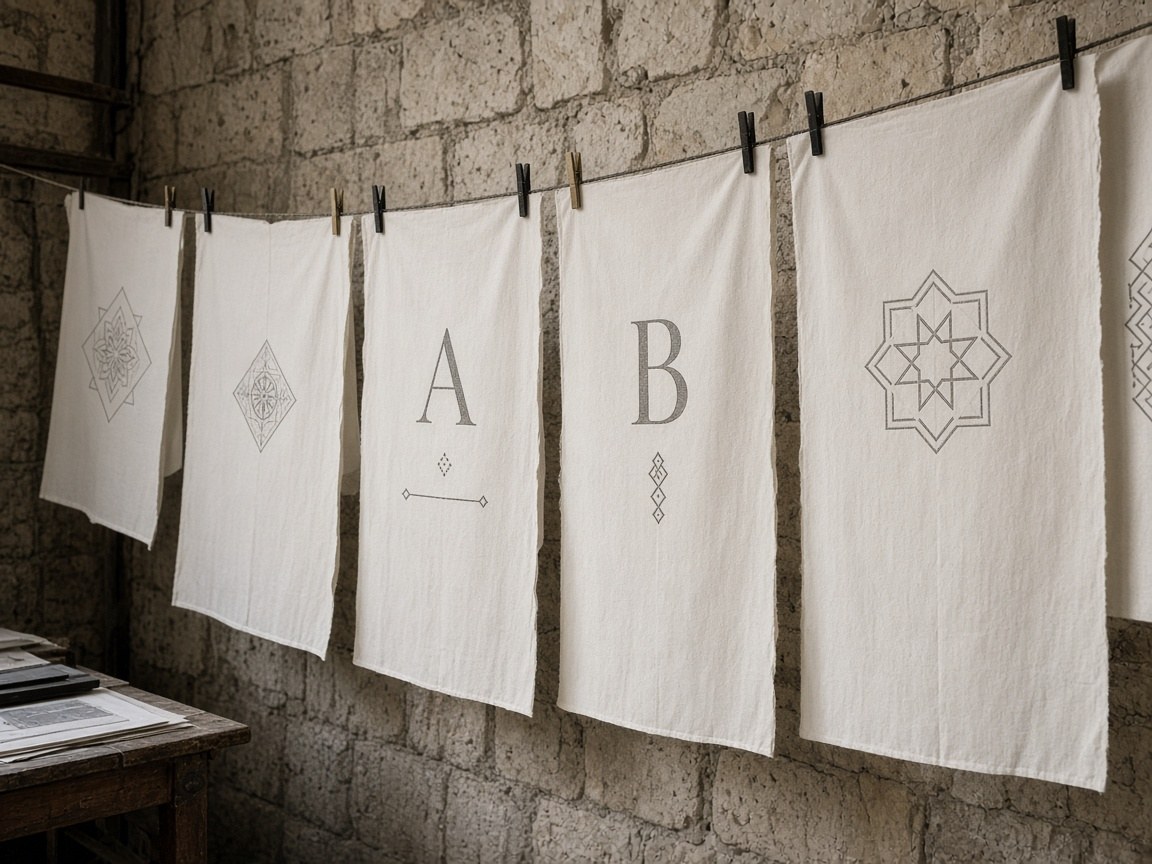
II · Broadsides
A psalm, a poem, a civic sentence, a wedding announcement that should not look like a flyer. The measure is generous. The title is set large; the colophon is small and honest about the press, the paper, and the size of the edition.
Editions are numbered. Twenty-five is a comfortable run; seventy-five is a long day. We have printed Hebrew verse with an English facing line, and English verse with a Hebrew dedication. Illustration, if any, is a block — not a photograph screened onto the sheet.
III · Ketubah
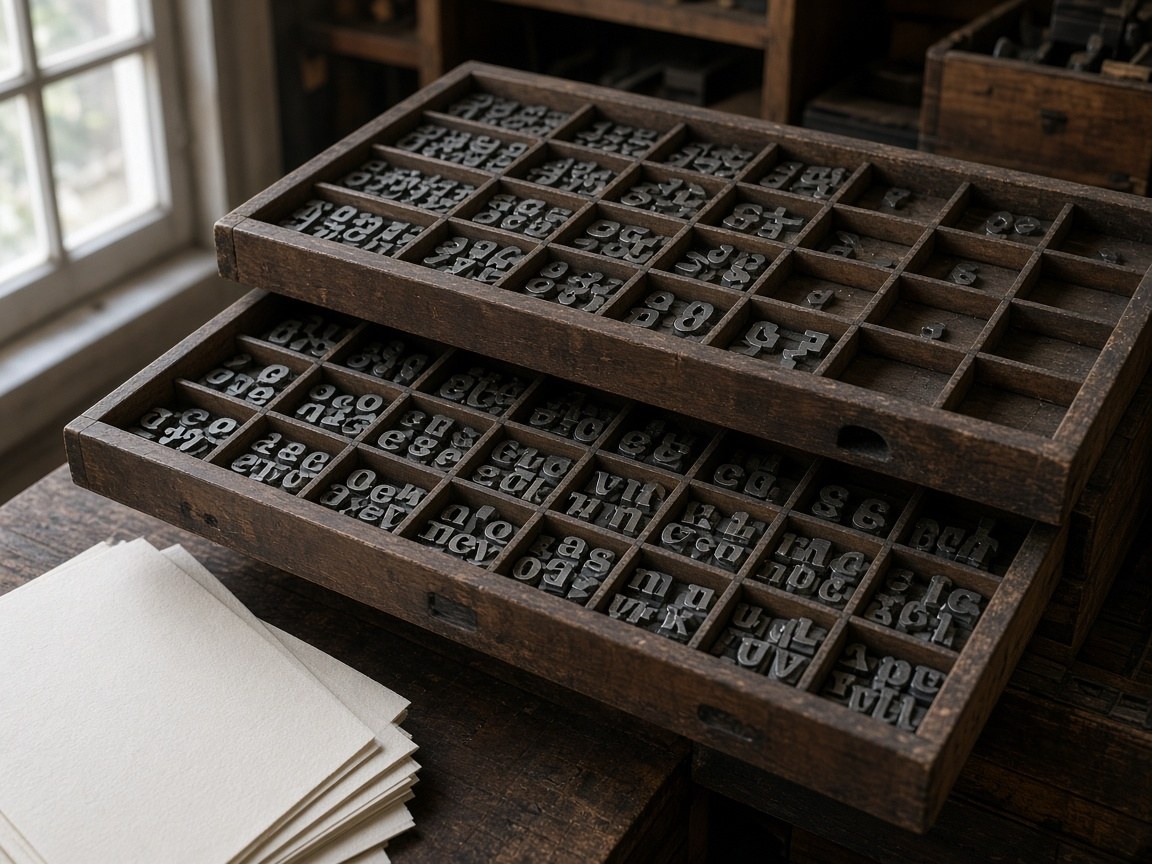
We set the traditional Aramaic and Hebrew clauses from metal, leaving a field for the couple’s names, the date, and the witnesses. Latin or English translations can sit below the main text or on a companion sheet. The paper is heavy cotton, sized for a frame.
We work from wording supplied by the couple and their officiant. We do not invent halakhic text. Proofs are read twice: once for spelling of names, once for the completeness of the clauses. Gold foil and glitter stocks are declined; oxblood and indigo are the colours we keep for this work.
IV · Book plates
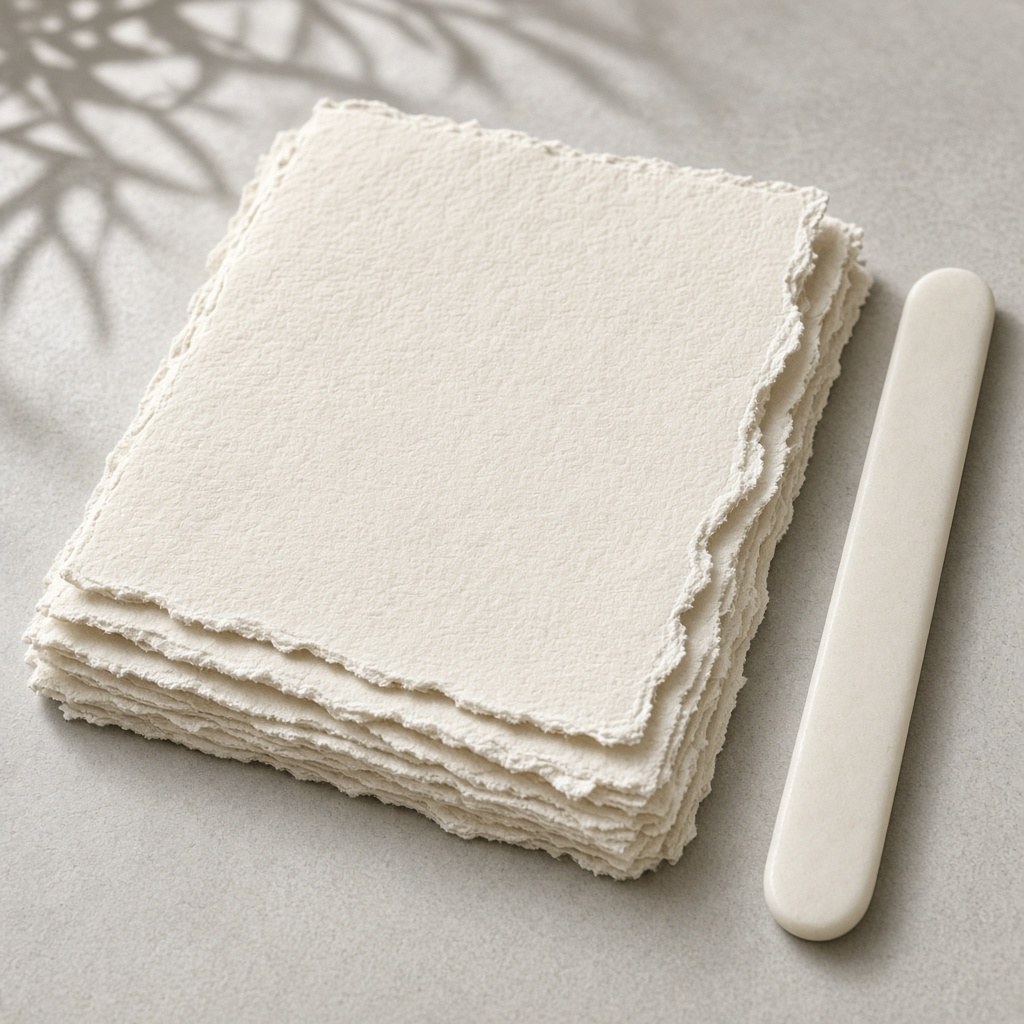
Ex libris labels: a name in Hebrew, a name in Latin, sometimes a house motto of one line. The plate should be small enough for an octavo pastedown and quiet enough not to compete with a title page. We print on gummed or ungummed cotton, in stacks of fifty or one hundred.
This is not a publishing house. We do not bind books, issue ISBNs, or warehouse novels. A plate is a mark of ownership and of taste. If you need an edition of a pamphlet, ask; if you need a thousand trade paperbacks, look elsewhere.
Paper & ink
A written estimate, a paper dummy, a type proof, and the finished sheets wrapped for travel. Delivery can be collected on Bezalel Street or sent by courier. Rush work is rare: type cannot be hurried without showing it.
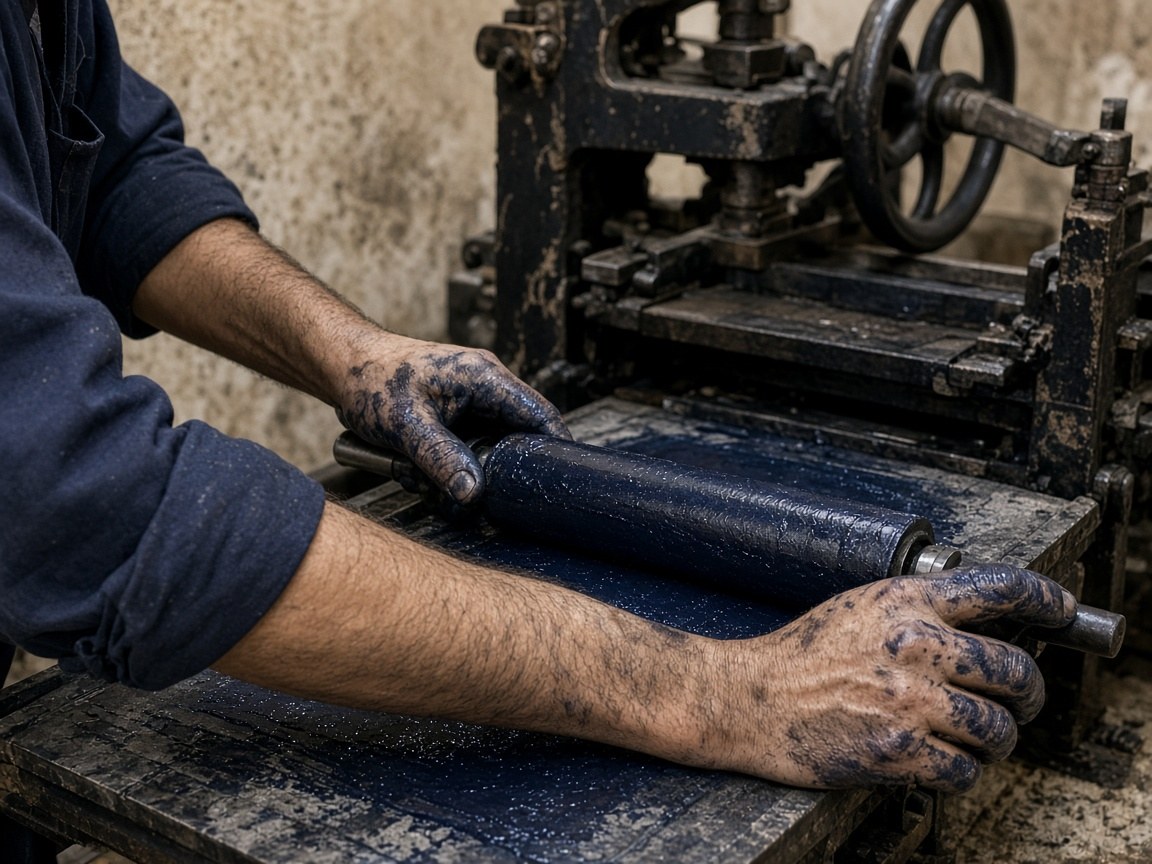
The inks are oil-based and mixed in small lots — iron black, oxblood, indigo, and an ivory tint reserved for blind impression. Too heavy a film fills the counters; too thin a film starves the serif. We do not keep fluorescent recipes or metallic dust that belongs on a foil stamper.
Cotton is the only printing stock. Envelopes, when they form part of a suite, match the card in fibre and in colour. We will advise a weight once we know whether the sheet must take a deep bite, hang on a wall, or sit in a frame under glass.
Edition sizes
These are not catalogue SKUs. They are the runs the stone, the ink, and a single afternoon will honestly support.
Fifty cards and twenty-five sheets is the suite we print most often. One hundred cards if the form stays standing. Not five hundred.
Twenty-five numbered sheets is a comfortable edition. Seventy-five is a long day. Each sheet is counted; overs cover spoilage, not a second market.
A ketubah is one sheet, sometimes with a companion translation. Book plates leave in stacks of fifty or one hundred — enough for a library, not a warehouse.