Copy
We ask for final wording. Names in Hebrew must be pointed if you want nikkud; Latin names must be spelled as they should appear, including accents. A ketubah requires the officiant’s approved text before we touch the case.
Press room
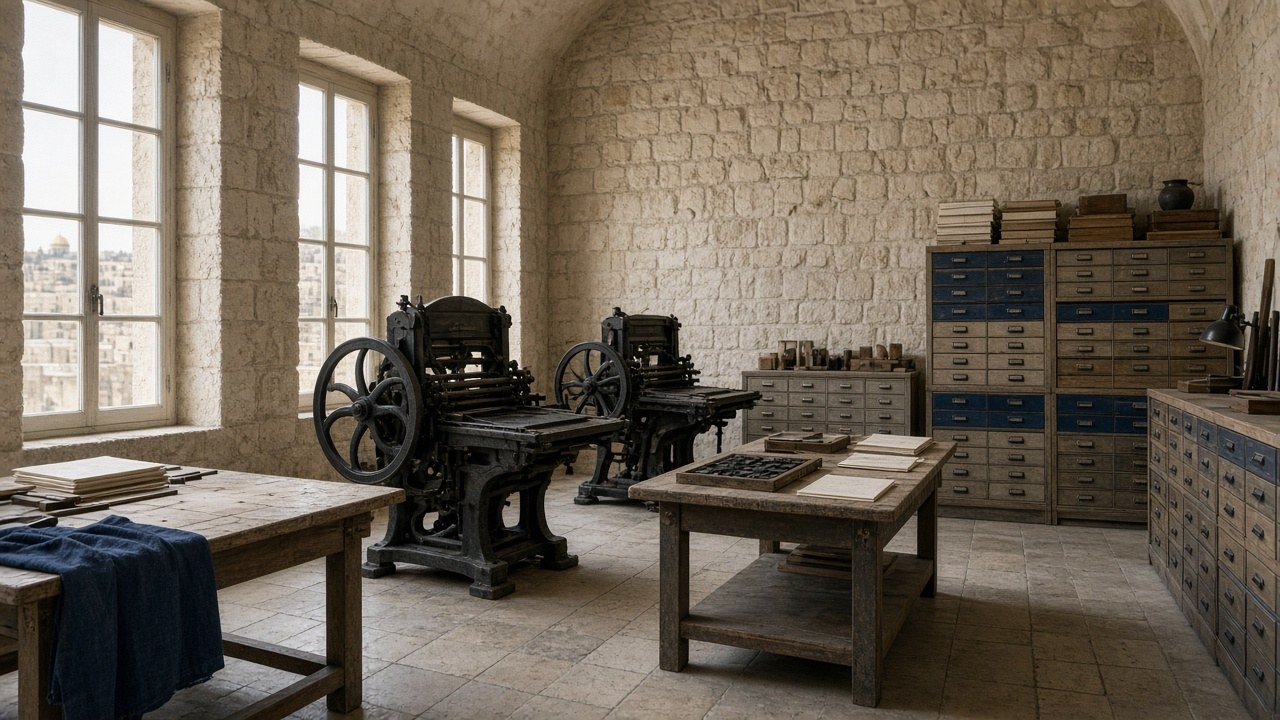
The atelier is a still life that moves: cases opened, rollers inked, sheets hung. Photographs here are records of process, not a showroom catalogue.
The floor
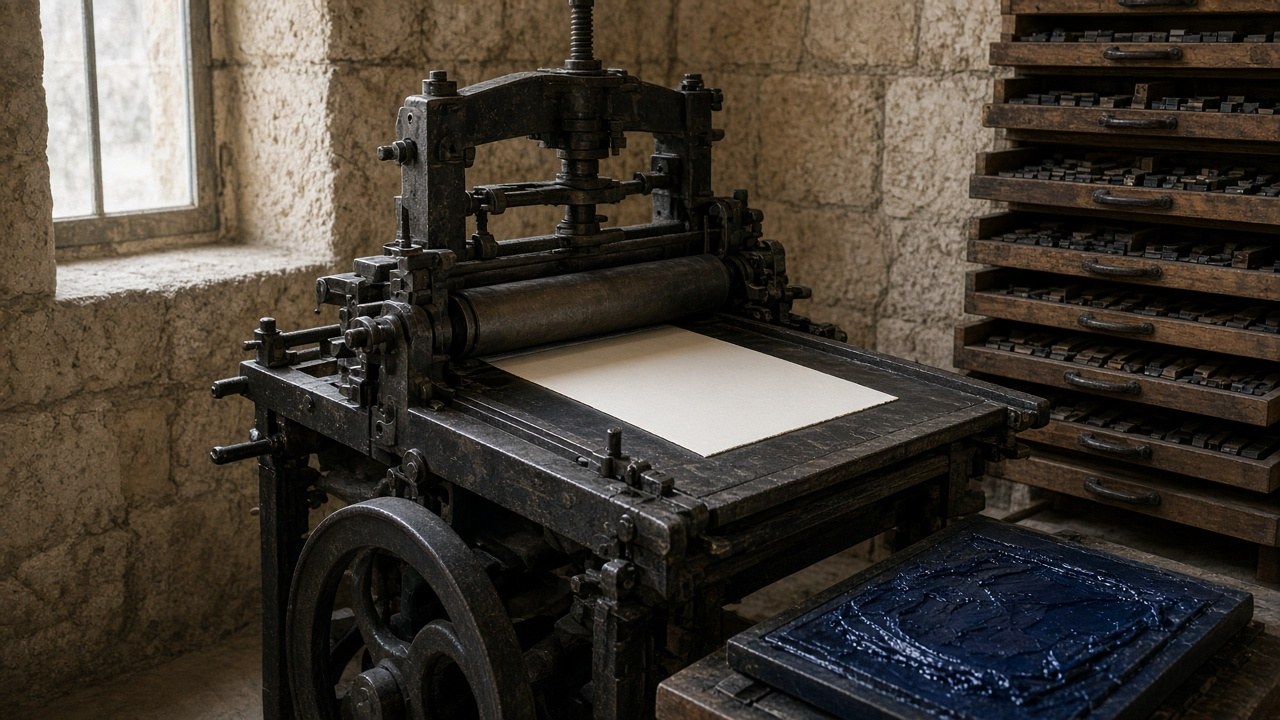
A cylinder proof press for broadsides and ketubah sheets; a smaller platen for cards and plates. Both are iron, both are maintained in the building, and both are too heavy to treat as décor. The imposing stone sits between them. Forms travel from case to galley to chase to bed.
We ink by hand. The smell in the room is linseed, not solvent. Windows stay open when the weather allows; in winter the north light is the only extravagance. Visitors who wish to see a make-ready should write ahead — Friday mornings are short, and Saturday the door is locked.
Tours are not a public programme. A commission in progress is the usual reason to stand at the stone.
Plate II
Hebrew reads toward the compositor’s left; Latin toward the right. The stick is filled slowly. Leading and the measure are decided on the stone before a sheet is wasted. A final letter in the wrong compartment is not a typographic joke — it is a word misspelled in public.
Nikkud, when the job requires it, comes from a separate drawer and is set after the consonants are locked. We do not guess pointing from a Latin email. If the copy is still being argued, the case stays closed.
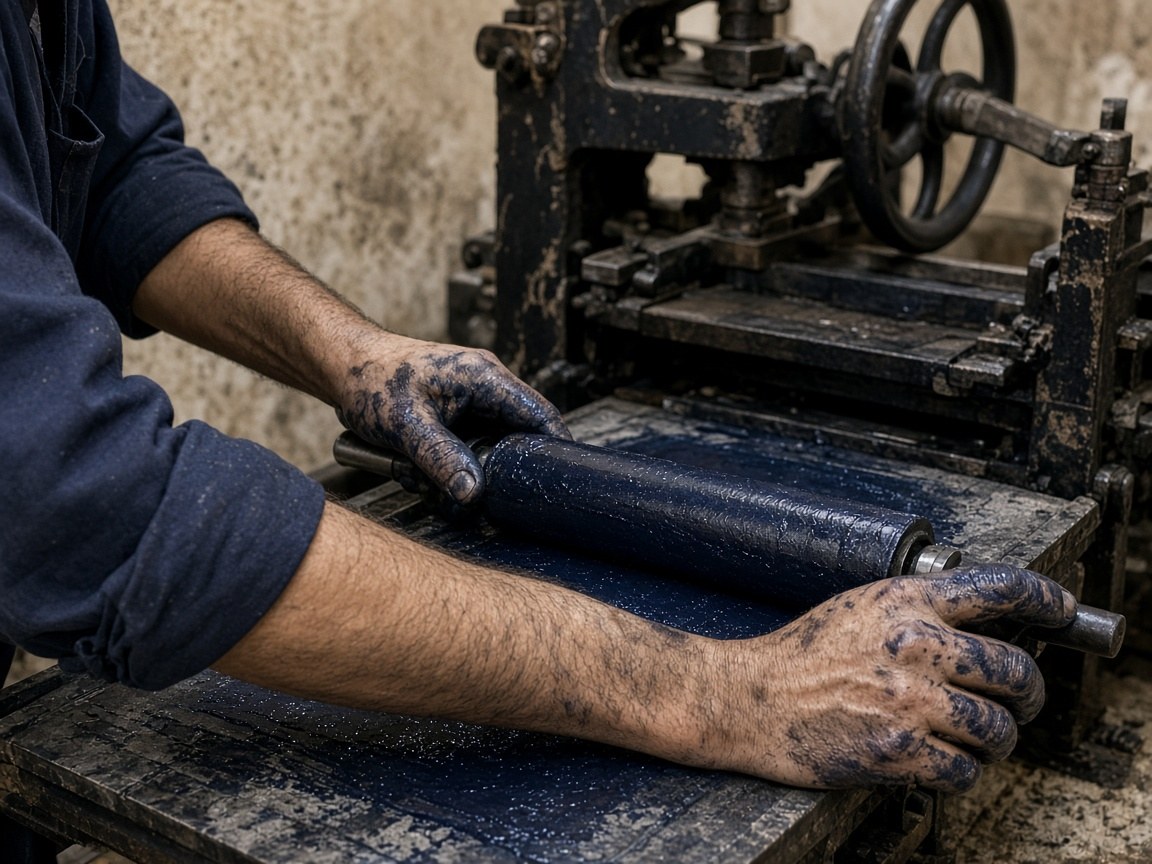
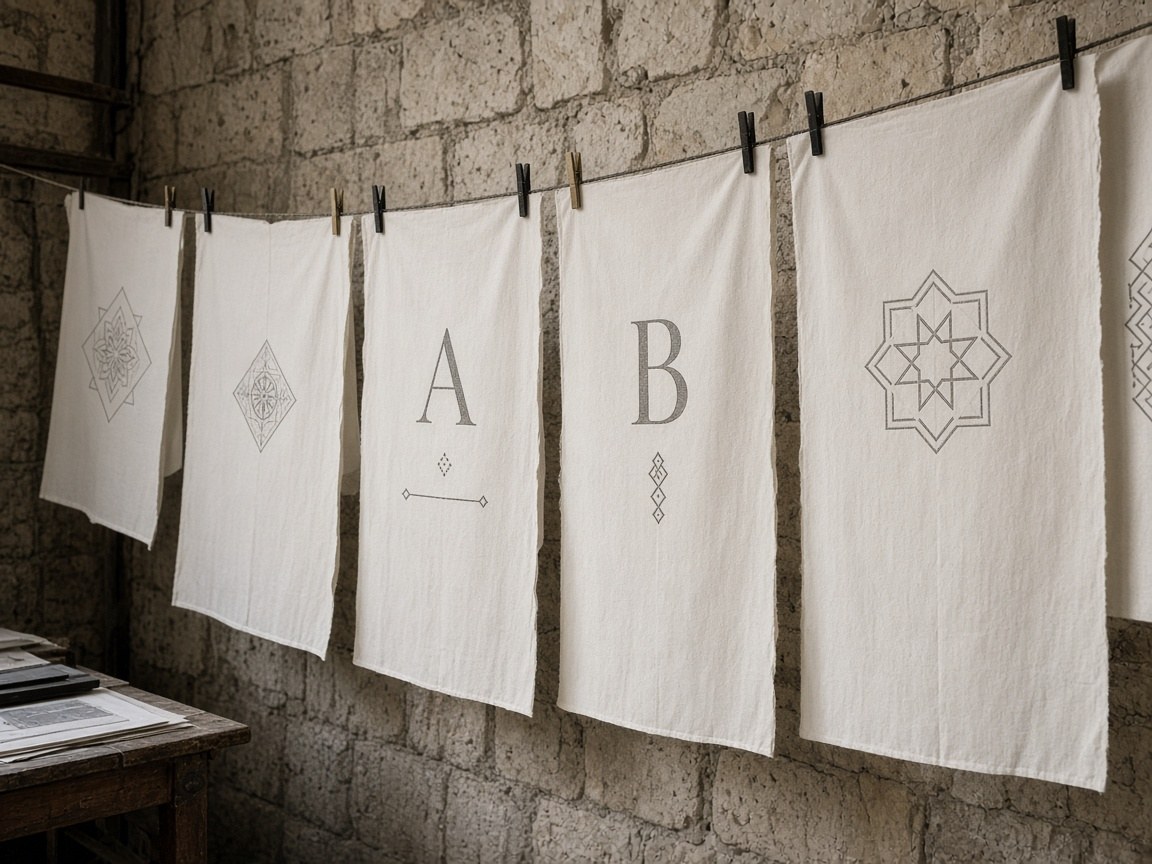
Plate III
The iron closes. The sheet takes the type. Make-ready is packed until the headline and the last line of the colophon print with the same honesty. Then the edition is run, sheet by sheet, and hung before the next can offset.
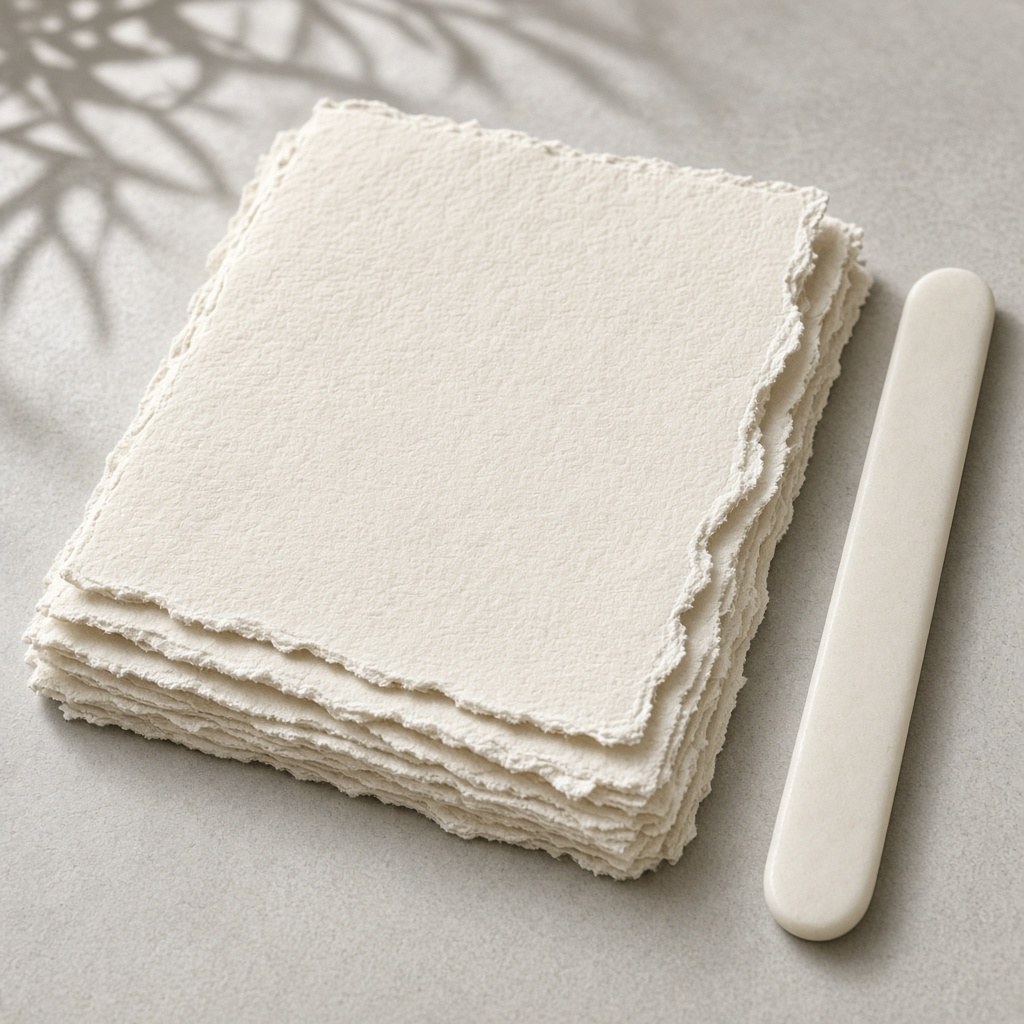
A first pull is not a souvenir. It is a question: is the form square, is the ink thin enough, does the cotton hold the bite without shouting? Corrections are made in metal. We do not “fix it in the file.”
Plate IV
Oil ink needs air. Sheets hang until the film will not set off on the neighbour. A ketubah may wait longer than a visiting card; a heavy impression on a heavy sheet is slower to declare itself dry. We do not box an edition to meet a courier that afternoon if the ink is still tender.
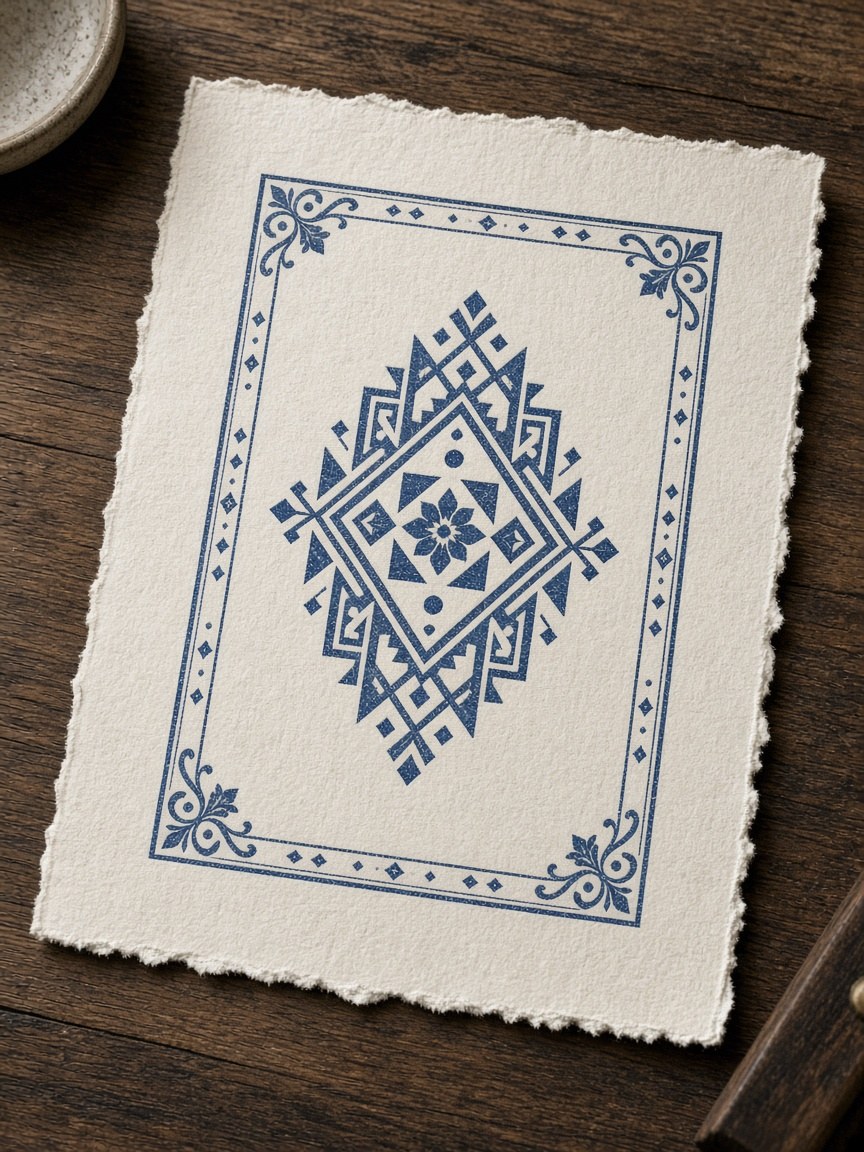
Oversheets cover spoilage. The counted edition is the edition. What remains after packing is either destroyed, returned with the job, or — if it shows no private name — kept as a press record.
Process
We ask for final wording. Names in Hebrew must be pointed if you want nikkud; Latin names must be spelled as they should appear, including accents. A ketubah requires the officiant’s approved text before we touch the case.
A first proof is pulled on the same cotton as the edition, or on a cheaper sheet if the form is still moving. Corrections are made in metal, not in a file. You read the language you commissioned.
The edition is printed, counted, and allowed to dry. Oversheets cover spoilage. The colophon, when the job is a broadside, names the press, the paper, and the year.
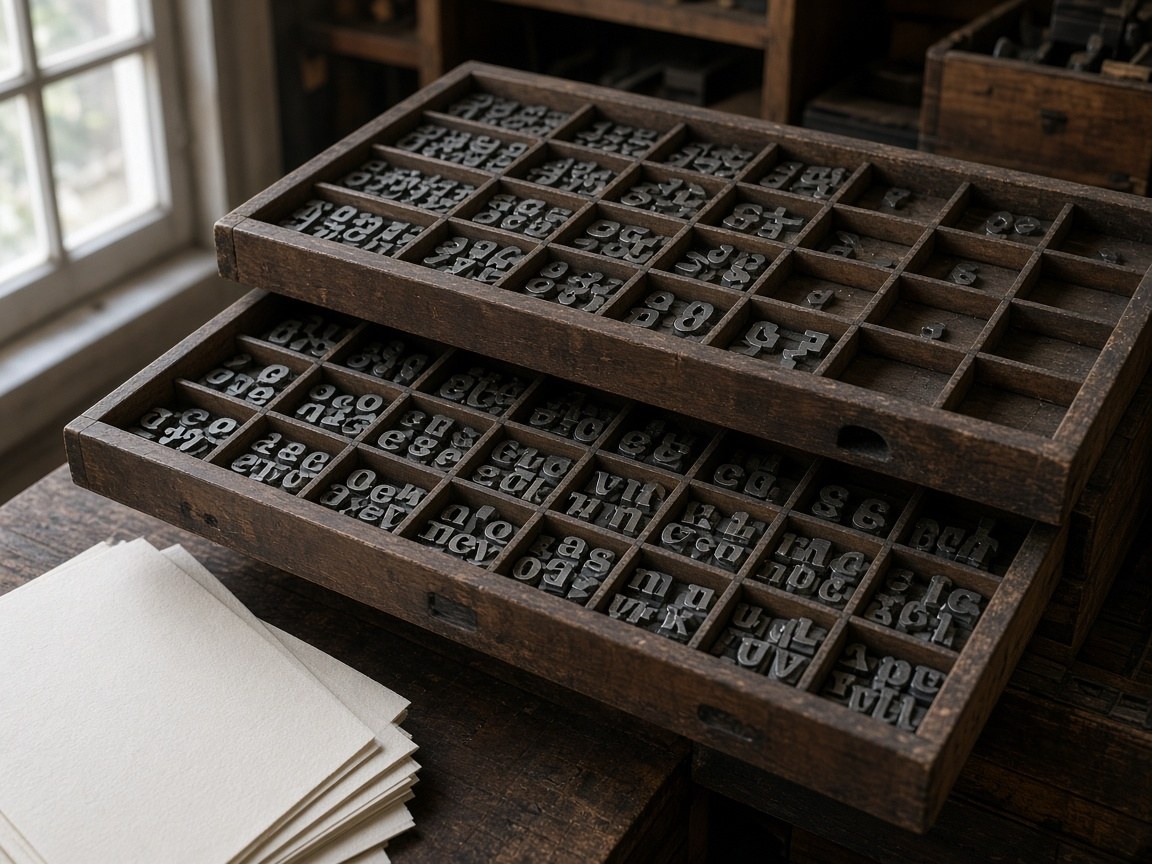
Plate V
Once the chase is tight, the letters are no longer a manuscript. They are a single object that will speak as many times as there are sheets. Standing type for a repeat stationery job is kept only with your knowledge; otherwise the form is distributed after the run, and the sorts go home to their compartments.
We do not photograph a private ketubah form for a portfolio. The plate you see here is a study setting — a line of foundry Hebrew locked for the camera, not a client’s clause.
The atelier is at 11 Bezalel Street, Jerusalem 9458104. Telephone +972 2 625 3381. The door is open Sunday to Thursday 09:30–17:30 and Friday 09:30–13:00.