Established 2009
A press on Bezalel Street
Metal type, cotton paper, and two iron machines in a north-facing room. The neighbourhood supplies the quiet; the cases supply the letters.
The room
Not a shop window. A working stone.
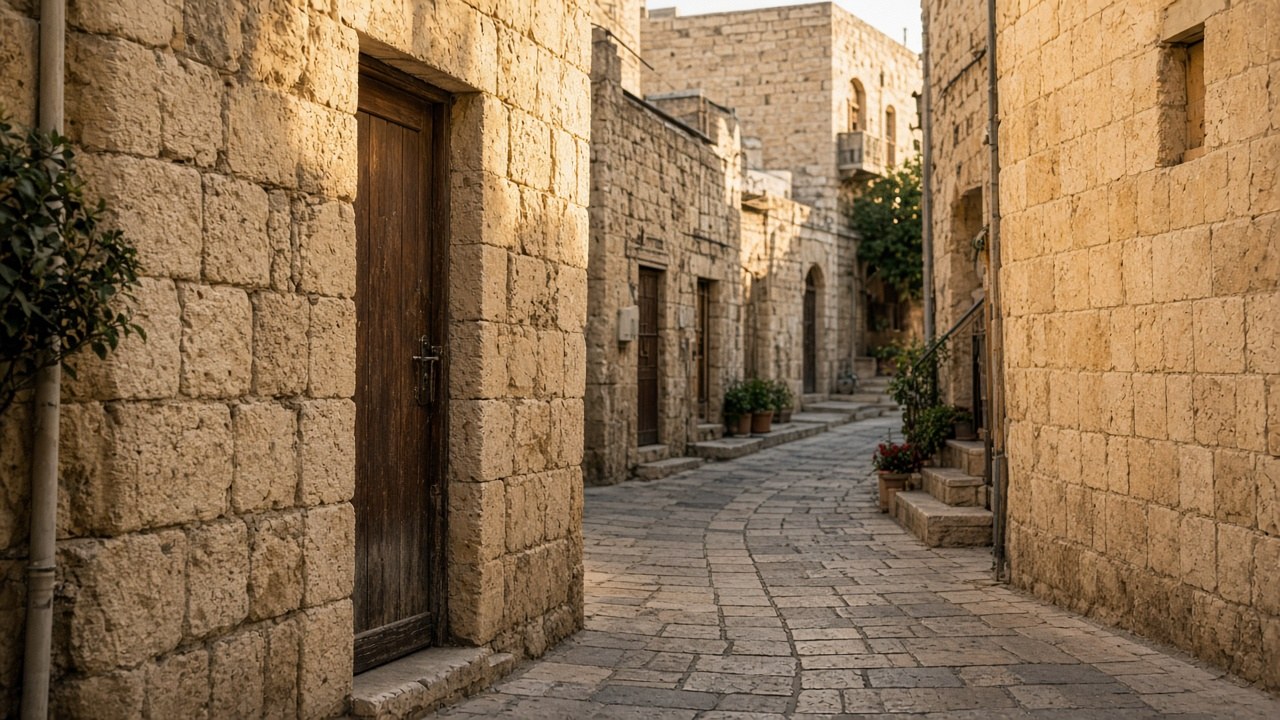
The atelier occupies the piano nobile of a limestone building at 11 Bezalel Street. The street takes its name from the academy that trained painters and silversmiths a century ago; the lane still smells of turpentine in the late afternoon. We took the lease in 2009 because the windows face north, the floor can carry iron, and the neighbours understand a press that works on Friday mornings and rests on Saturday.
Visitors expecting a retail counter are gently redirected. There is a stone, a bank of cases, drying racks, and a table for looking at proofs. Editions leave the building wrapped in glassine. Conversations about wording, language, and paper happen standing, with a pencil, over the last good sheet.
A letterpress studio is a library that speaks once, then is distributed as paper. Studio note, 2014
We print Hebrew and Latin in the same week, often on the same sheet. A ketubah may carry Aramaic clauses with a Latin colophon. A broadside may set a psalm above an English dedication. The two scripts are not a novelty pairing; they are the ordinary bilingual life of this city, given the dignity of foundry metal.
Since 2009
A lease, then the iron
Jerusalem Letterpress did not begin as a museum of old machines. It began as a decision to keep composition and impression in one building, under one name, for clients who still wanted a sheet that had met type. The first months were spent shoring the floor, hanging racks, and learning which hours the street would tolerate the thud of the platen.
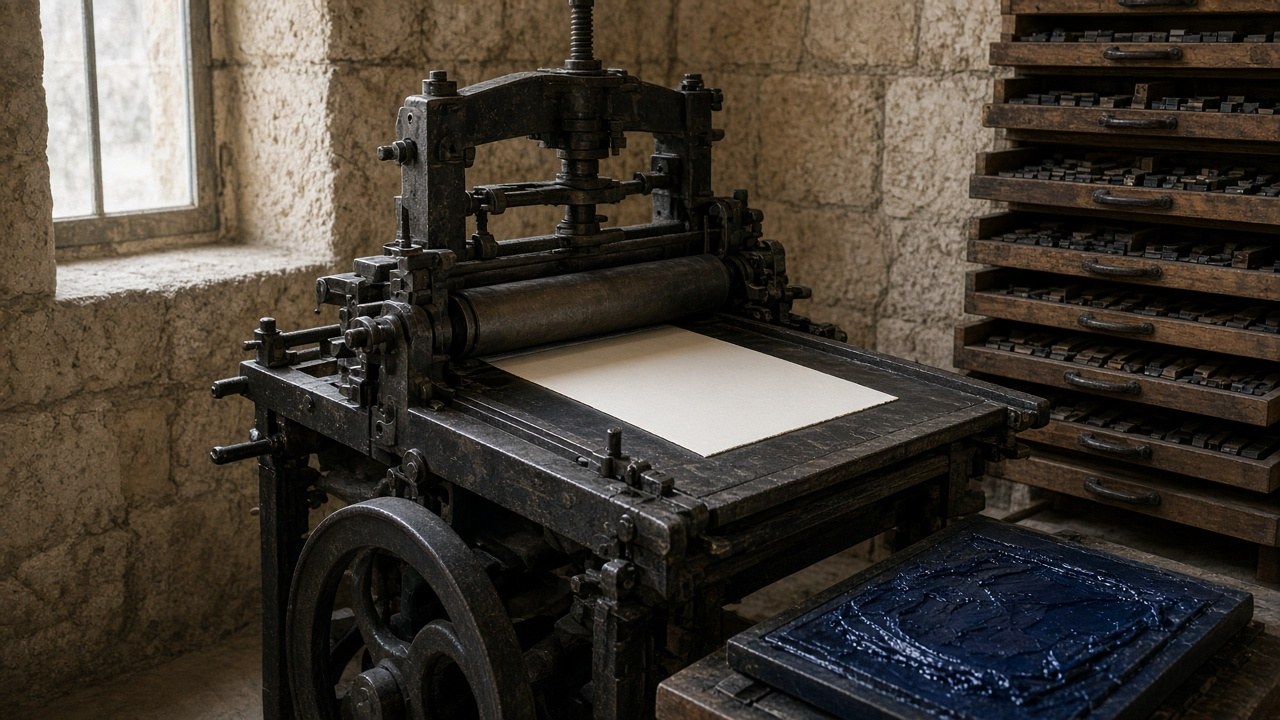
The cylinder arrived for broadsides and ketubah sheets; the smaller platen followed for cards and plates. Both remain in daily use. We have not replaced them with a digital device that imitates a dent. The company is registered in Israel under number 515772019. The work is still the work: set, ink, impress, count.
We are not a revival society and not a tourist demonstration. The presses earn their keep by finishing commissions, not by performing for a gallery schedule.
Metal type
Fourteen cases, two directions
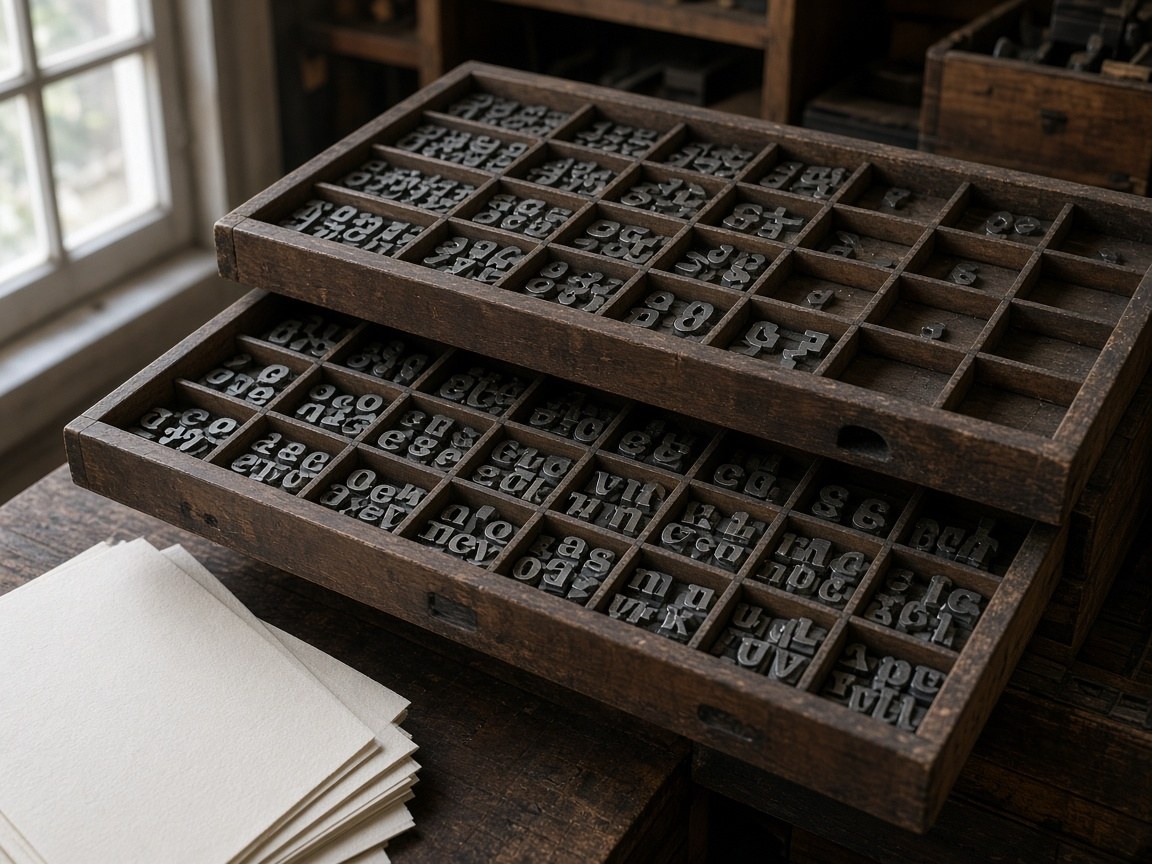
The Hebrew cases hold square letters in several sizes, with a modest supply of nikkud for liturgical and ketubah work. Composition is slow by design. A misplaced final letter is visible to anyone who reads; we proof in the language of the text, not against a Latin dummy.
The Latin cases hold a roman and an italic suitable for correspondence and for the quiet English lines that often accompany a Hebrew title. We do not keep novelty faces. Ornament is limited to a few fleurons and a hairline rule. If a job wants illustration, we commission a block or print type alone.
- Hebrew
- Foundry sorts for body and display; nikkud drawn from a separate drawer when vocalization is required.
- Latin
- Roman and italic for English and European languages; figures cut to the same lining height as the Hebrew display.
- Spacing
- Copper and brass spaces, leads, and slugs cut to the measures we actually use: visiting cards, octavo broadsides, ketubah sheets.
Cotton paper
Fibre that can take a bite
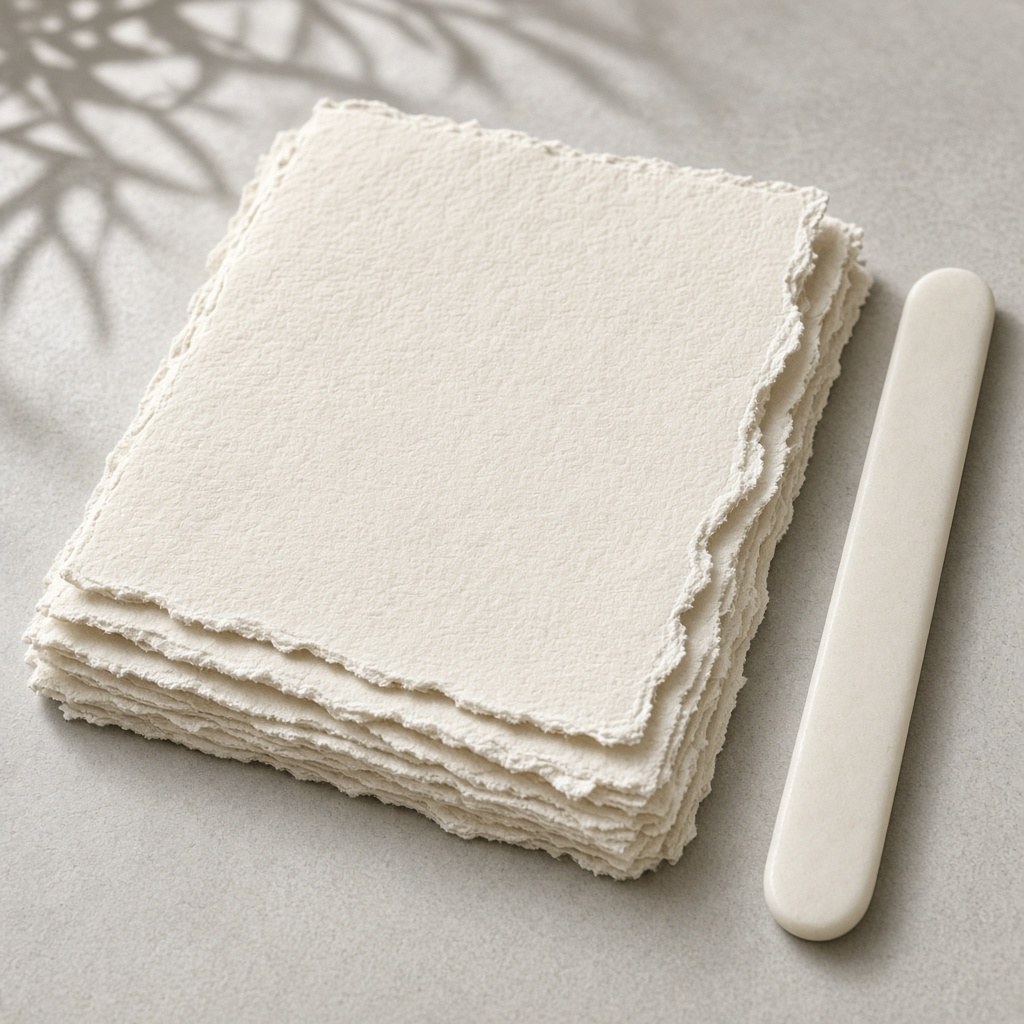
Every edition is printed on one hundred percent cotton. Wood-pulp bond collapses under a proper impression; clay coats shine and crack. Cotton holds the dent of the type without shouting. We stock a warm ivory and a quieter white, in weights suited to cards, broadsides, and ketubah sheets that will be framed.
Deckle edges are kept when the sheet allows it. Trimmed edges are cut square on the board shear, not with a rotary office trimmer. Clients who need envelopes receive them in a matching cotton, unprinted or with a single return line.
We do not print on synthetic stocks, foil boards, or anything marketed as “letterpress texture” that has never met a press. The impression is made here, on this iron, on this paper.
Two scripts
The city’s ordinary bilingual sheet
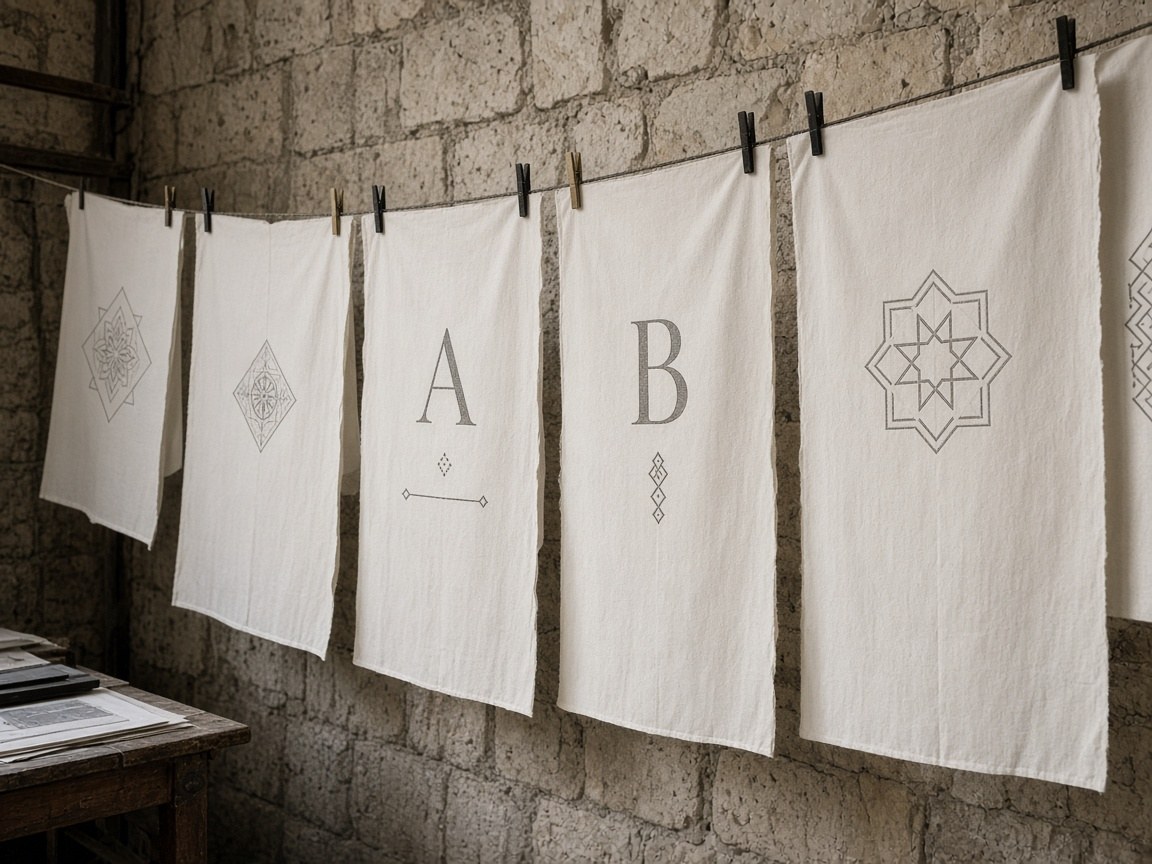
Jerusalem does not treat Hebrew and Latin as a special event. Family names cross scripts; a dedication may sit under a psalm; a colophon may be English because the edition will travel. We set both from metal in the same week, often locking them in one chase when the measure allows a hairline between.
Proofs are read by a speaker of the language on the sheet. We will not sign off a Hebrew ketubah against a transliteration, or an English line against a memory of how it sounded on the telephone. Accents, final letters, and the spelling of a house name are the job. If the wording is still moving, we wait.
What we are not
A short list of refusals
Jerusalem Letterpress is not a copy centre, not an offset house, and not a publisher of novels. We do not run wedding magazines, tourist flyers, or short-run digital books. We do not tattoo skin. We print paper, from type, in Hebrew and Latin, in editions you can count without a spreadsheet.
The studio keeps Sunday to Thursday hours, a short Friday, and a closed Saturday. Proofs can be collected from Bezalel Street or packed for courier within the city and abroad. If the job belongs on a toner drum, it does not belong here.